


Film and Theatre Courses
Welcome to our courses where we take you on a journey through the fascinating world of films and filmmaking, as well as the wonderful world of theatre. From behind-the-scenes insights to in-depth analysis of your favorite movies and plays, we've you covered. Join us as we explore the art and craft of these mediums and discover what makes them such powerful forms of storytelling.
Join us as we explore the life and work of John le Carré, from his career in British intelligence to his emergence as one of the greatest espionage writers of the twentieth century.
Beginning with his early novels and their screen adaptations, including Call
for the Dead (A Deadly Affair) and The Spy Who Came in from the Cold,
we will follow the development of a writer whose work transformed the spy genre. The course will examine his masterful George Smiley novels, including Tinker Tailor Soldier Spy in both its celebrated television and film versions, the unfilmed The Honourable Schoolboy, and Smiley’s People.
We will also explore later adaptations such as The Russia House starring
Sean Connery, A Most Wanted Man with Philip Seymour Hoffman, and the darkly satirical The Tailor of Panama. Through a combination of complete films, selected excerpts and discussion, we will trace the evolution of a storyteller whose insight and subtlety extended far beyond conventional espionage fiction.
Who inspired le Carré’s writing? How much of his own life found its way into his novels, particularly A Perfect Spy? And what attracted some of the finest actors of their generation—including two former James Bonds—to bring his unforgettable characters to the screen?
An engaging course for readers, film lovers and anyone fascinated by the shadowy world of espionage.

Families on Film
The American Civil War and the Opening up of the West
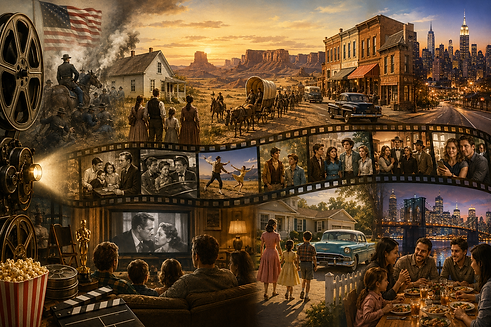
How has Hollywood reflected the changing social realities of the United States? In this fascinating five-week course, we will use film to explore American social history from the Civil War to the dawn of the new millennium.
Taking inspiration from Tolstoy’s famous observation in Anna Karenina that “each unhappy family is unhappy in its own way” (while remembering that “all happy families are alike”), we will examine how filmmakers have used family stories to explore wider questions about American society, identity and change.
Through the work of directors including Sam Mendes, Steven Spielberg, Greta Gerwig and Wes Anderson, we will consider how cinema portrays family relationships, social tensions and national myths. American culture often looks nostalgically to the past as a way of questioning the present, and Hollywood films can provide fascinating insights into the hopes, anxieties, obsessions and neuroses of modern America.
An engaging course that combines film appreciation, social history and cultural analysis.